
Woodland City Directory Collections
Woodland city directory research centers on the Yolo County Archives. The narrow Polk finding aid identifies 39 books and lists exact Woodland publication years from 1939 through 1989. A broader Archives brochure describes Polk Woodland directories through 1999 and miscellaneous Woodland directories from 1898–1975, with gaps in both descriptions. The finding aid and brochure should be read together, then checked with Archives staff before a missing year is treated as a true publication gap.
| Collection | Years | Where Held | Access |
|---|---|---|---|
| R.L. Polk Woodland directories | Exact listed volumes 1939–1989; brochure says through 1999 | Yolo County Archives | Open by appointment |
| Miscellaneous Woodland directories | 1898–1975, with gaps | Yolo County Archives | Appointment and catalog check |
| Woodland High yearbooks | 1907–1997 | Yolo County Archives | On site; selected digital material |
| Newspaper and local-history companions | Daily Democrat 1878–1950; Mail 1890–1952 | Yolo County Archives | Microfilm and research-room access |
A year absent from a catalog can reflect a gap in surviving holdings, a publication pause, a duplicate or multi-place volume, or a catalog detail. The OAC finding aid’s 31 exact listed years alongside its 39-book extent is a useful prompt to ask staff about the difference. Do not fill a gap by guessing a volume exists.
Woodland's Polk Shelf
The Polk Woodland finding aid is the most exact online description of the local city directory shelf. Its listed years are 1939, 1948, 1951, 1953, 1955, 1956, 1957, 1959, 1960, 1962, 1963, 1965, 1966, 1968, 1969, 1970, 1971, 1972, 1974, 1975, 1976, 1977, 1978, 1979, 1980, 1981, 1982, 1985, 1987, 1988, and 1989. The catalog extent says 39 books, so the count and the visible year list deserve a staff check rather than a neat but unsupported assumption.
The finding aid is a description of holdings, not a digitized run. It helps a researcher request the right physical volume and avoid treating a missing online scan as a missing Woodland city directory. Ask for the title page, publication year, publisher, page sequence, and any street section. Note whether a volume covers Woodland alone or includes nearby places.
The finding-aid screenshot below is linked to its OAC record. It points to the catalog trail behind the exact-year list.
Open the Polk Woodland finding aid
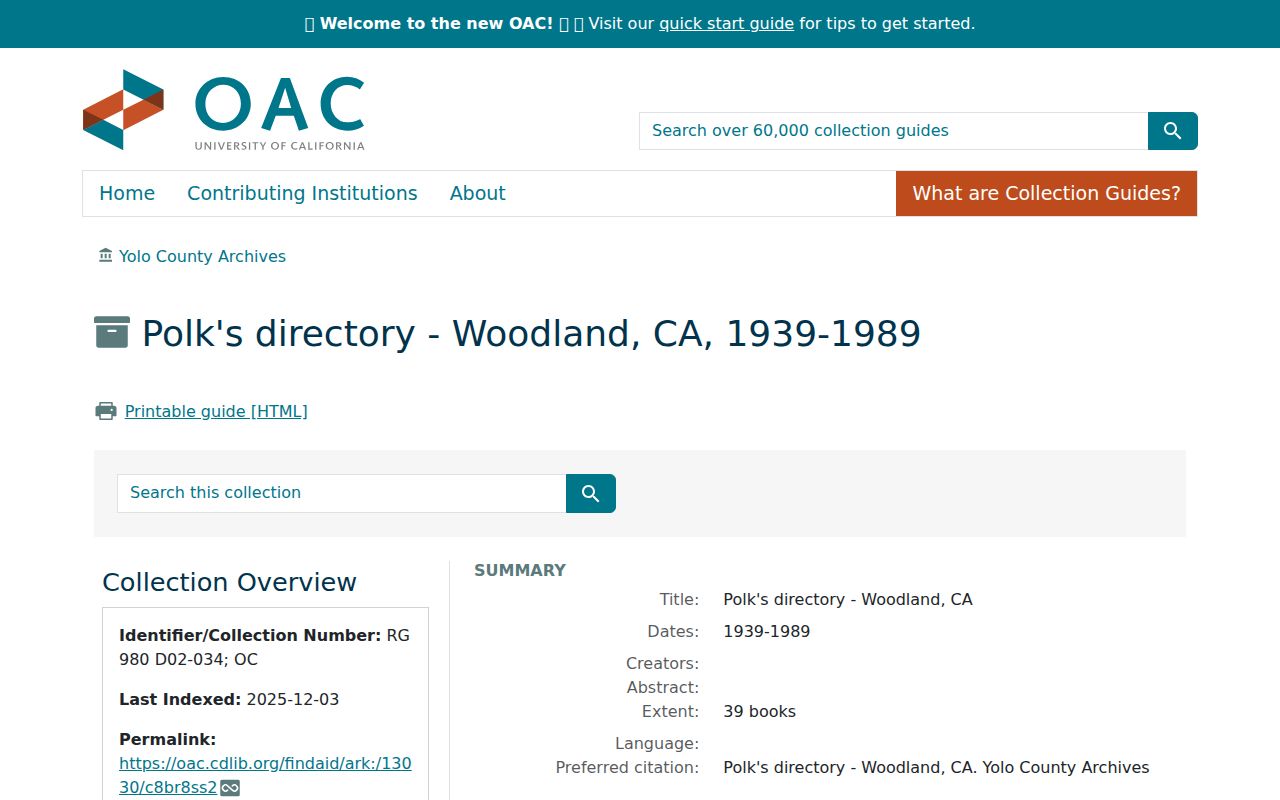
Use the shelf as a time series. A 1939 entry can be compared with the 1940 census, later books can bracket 1950, and newspaper or deed evidence can explain years the shelf does not hold.
Woodland Archives Access
The Yolo County Archives at 226 Buckeye Street is the practical access point for Woodland city directories and their companions. The research lists 530-666-8010 and archives@yolocounty.org. Appointment hours are Tuesday 9–1 or Thursday noon–4. Materials span the 1850s to the present and include county agency records, family and business collections, maps, blueprints, photos, manuscripts, newspapers, yearbooks, books, assessor rolls and maps, deeds, and official records.
On-site access also includes Ancestry and more than 5,000 Newspapers.com titles. The Archives brochure describes Polk directories through 1999, miscellaneous Woodland directories from 1898–1975, Woodland High yearbooks from 1907–1997, Sanborn Fire Insurance Maps from 1926–1961, Woodland Daily Democrat microfilm from 1878–1950, and The Mail of Woodland from 1890–1952. Holdings and access can have gaps, so ask for the collection title rather than requesting “everything about a person.”
The California State Archives is a separate state-level repository and catalog route. Its collections can identify state government record groups and descriptive guides, but a catalog description is not the same as a digitized image or a Woodland household index.
Browse California State Archives access
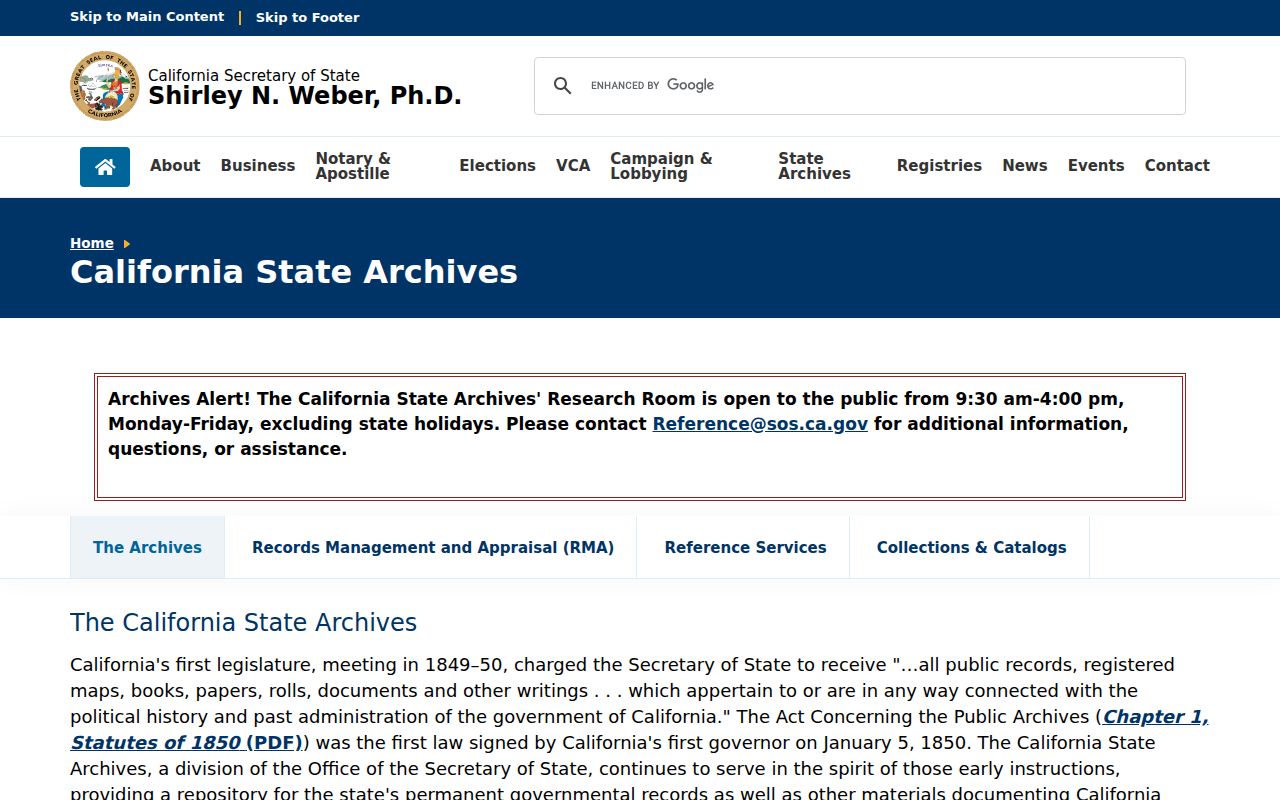
Use the state catalog for a record-group lead, then confirm whether the material is onsite, described only, or available through another custodian.
The Archives was founded in 1985 as the official county repository. Its local value is the overlap: names in a directory can be checked beside a tax roll, newspaper notice, school yearbook, map, or donated family collection without assuming one source tells the whole story.
Read a Woodland City Directory Entry
A Woodland city directory entry is a dated clue, not a modern identity record. Alphabetical pages commonly place surname, given name or initial, spouse in parentheses, occupation, and residence address together. A business or classified section can connect a proprietor to a place. A street or criss-cross section reverses the order and lists street, number, and occupant. The exact symbols vary by volume, so photograph the title page and abbreviation key before copying the line.
| Name | Head of household or listed adult; spouse may appear in parentheses |
|---|---|
| Occupation | Occupation and, in some volumes, a business affiliation |
| Address | House number and street, with volume-specific residence or boarding abbreviations |
| Tenure mark | Only when that volume defines a symbol or status mark |
| Widow notation | A relationship clue such as “wid” when the key or entry uses it |
- Criss-cross section
- The street-order half of a directory, used to move from a numbered address to a listed occupant.
- Householder index
- A name-first or household-first index that helps distinguish a listed adult from a business entry.
- Abbreviation key
- The volume’s legend for occupations, streets, residences, and status marks; record it before interpreting an entry.
Woodland Names Beyond Directories
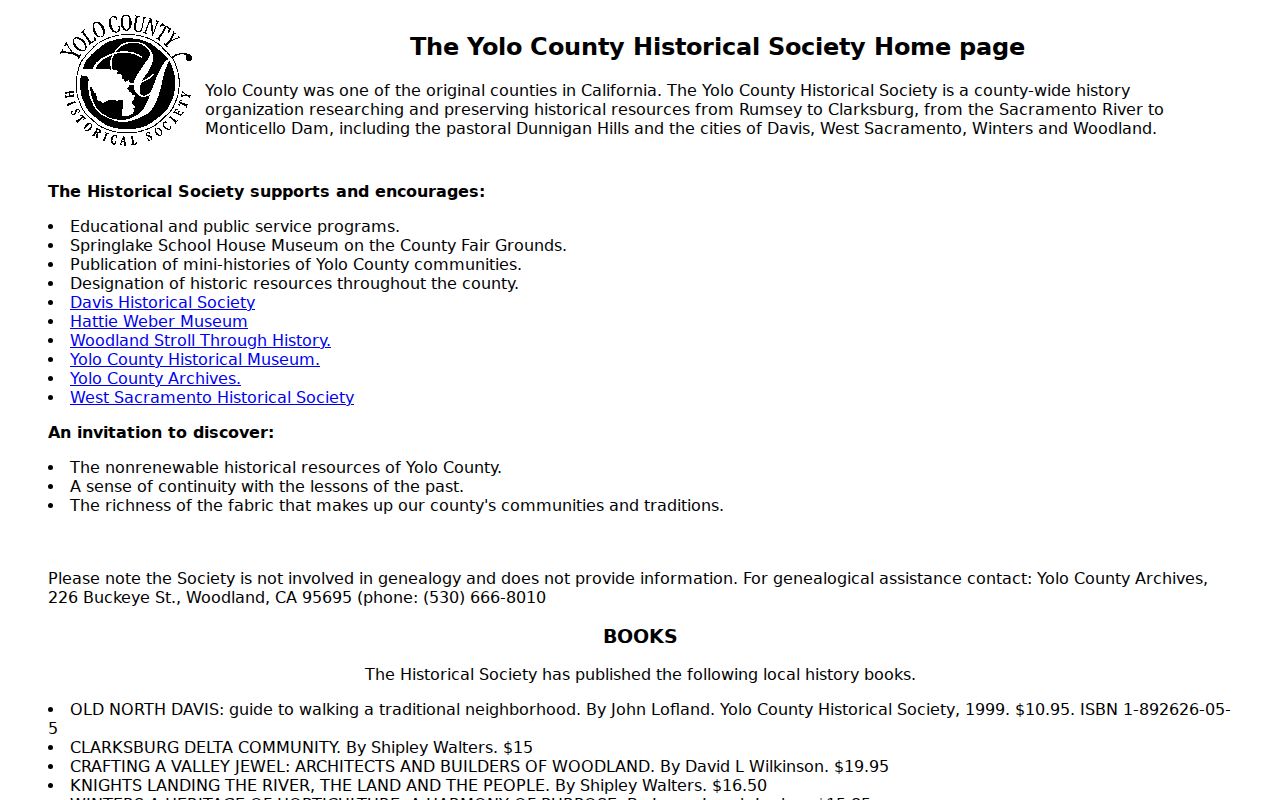
A city directory is stronger when paired with the local collections that explain what its abbreviations leave out. Woodland High yearbooks can establish a class, club, team, faculty role, or maiden-name clue. Daily Democrat and Mail microfilm can reveal obituaries, weddings, property notices, business openings, and civic membership. The Yolo County Historical Society provides countywide context and genealogical direction, but its narratives should be checked against the Archives and official records.
The Historical Society screenshot is linked to the society’s source page before the image. It represents a companion institution, not a public member roll or a substitute for a directory entry.
Visit the Yolo County Historical Society resource
Search personal names with exact spelling, initials, spouse pairs, address, and normalized diacritics. A Spanish-language or compound surname can appear in different index forms. Never infer identity from ethnicity or a surname alone.
Woodland Sanborn Address Clues
Sanborn fire-insurance maps do not name every resident, but they can explain the physical address behind a city directory entry. The Archives holds Woodland Sanborn material from 1926–1961, and selected sheets are available through the Library of Congress Woodland map resource. A sheet can show building footprint, street number, construction material, use, and nearby lots. Those clues help distinguish a reused number, a changed street edge, or a parcel that later subdivided.
Start with the directory’s printed address and year. Compare the map sheet, lot shape, and nearby landmark. Then match the legal description, deed, assessor map, or later GIS parcel. A Sanborn footprint dates the built environment, not the occupants. It can show why a house-history search needs more than a modern street name.
The map is especially helpful when the city expands east or southeast, rural routes become city addresses, or a subdivision creates new high-number streets. Preserve old and new APNs when the Archives or Assessor supplies both.
Woodland Directory Gaps
Gaps are part of the evidence. The exact Polk list is narrower than the broader brochure description, and the source material does not identify a verified publication pause, comprehensive digitization cutoff, or individual sample page. A missing year can reflect a missing volume, catalog scope, a move, a death, a nonresponse, or an index omission. Write “not found in the searched volume” instead of “not living in Woodland.”
Bridge a gap with the nearest directory year, the census, newspaper microfilm, tax rolls, deeds, yearbooks, Sanborn maps, and Archives family or business collections. Record negative searches with the title, year, page range, and spelling used. That method keeps a Woodland city directory project honest and makes a later Archives visit more efficient.
When an entry includes an occupation or business, use it as a locating clue rather than an identity shortcut. A spouse pair, exact address, and dated newspaper notice are stronger together. If a street section is missing, the city’s parcel list and Sanborn sheet may still reconcile the address before the next directory year is found.
Note: The newest public federal census is 1950 because the 72-year release rule keeps later schedules closed until their release dates.
Trace a Woodland Household
Use a Woodland city directory as a sequence rather than a one-year answer. Start with the strongest known name or address, record the exact spelling and page, then compare the nearest available volume before and after it. A move, spouse change, occupation shift, or street-section entry can identify the right household. The 1940 and 1950 federal censuses are especially useful anchors because they fall inside the directory era and remain public under the 72-year release rule.
- Find the person or address in the nearest available Woodland volume and cite the title, publisher, year, page, and key.
- Move to the next available year and compare address, spouse, occupation, initials, and household spelling.
- Check the street or criss-cross section to test the address and nearby listed households.
- Pair the directory evidence with the 1940 or 1950 census, keeping the census household separate from the directory’s listed adult.
- Use newspapers, obituaries, probate, deeds, tax rolls, or Archives collections to explain a move, death, or ownership change.
Disappearing from a city directory does not prove death or departure. It can mean a missed response, a changed street form, a new subdivision, a publication gap, or a person who was never listed. An obituary can support a death date. A deed can support a transfer. A census can show household relationships. Keep each source’s claim distinct.