
What a Woodland Resident Lookup Covers
A Woodland resident lookup is a sequence of record types, each with a different claim. The Assessor can connect a parcel to an assessee and mailing address. The recorder can show a named party to a deed or lien. A court portal can show a party, case type, filing status, hearing, or docket event. Vital copies can confirm an eligible event or relationship. A directory, yearbook, license, business filing, or unclaimed-property record can add a dated personal clue without proving a current home.
| Record | What It Confirms | Where to Search | Access |
|---|---|---|---|
| Assessor roll | Assessee, parcel, mailing address, possible exemption | Yolo Assessor counter or phone | Free computer; phone limit |
| Voter status or file | Own registration status or qualified-file data | California SOS / Yolo Elections | Authentication or permitted purpose |
| Yolo court records | Party, case type, events, hearings, linked documents | Tyler portal or clerk | Free summary; file/copy limits |
| Vital records | Birth, death, marriage, or divorce event | Yolo Clerk-Recorder / CDPH | Eligibility and copy type control |
| License, business, or unclaimed property | Credential, entity, holder, or reported-location clue | California agencies | Free summaries; not residence proof |
Run the narrowest source first. A known parcel starts with the Assessor. A case number goes straight to the court. A former classmate belongs in a yearbook and newspaper search. An heir question belongs in probate, an obituary, and then the deed or contact route that fits. A birth-relative question must use California’s official adoption-information and mutual-consent programs, not a sealed-file workaround. Current voter status is a self-lookup, not a public name search.
Woodland Court Portal Fields
The Yolo Tyler public portal is the first court channel for a Woodland name search. The official portal guide confirms a case-number mode and a party-name mode, plus a hearing search using party, attorney, judge, or courtroom fields. Hearing fields are populated through the portal’s dropdowns and can have mandatory requirements. The portal does not publish an authoritative earliest online year in the reviewed material, so a missing old case should move to the clerk rather than be dated by guesswork.
| Portal field | Search mode | Result clue |
|---|---|---|
| Case Number | Direct retrieval | Case detail, events, hearings, linked documents |
| Party Name | Person or business | Caption, role, case type, filing date and status |
| Attorney | Name or Bar number | Hearing or case relationships |
| Judge | Hearing dropdown | Calendar and department context |
| Courtroom | Hearing dropdown | Hearing filter, not an identity proof |
Record the full caption, party role, case type, filing date, status, assigned judicial officer or department, hearing entries, docket events, and linked minute orders where shown. A complaint is an allegation. A minute order is not automatically a judgment. The clerk holds the fuller nonconfidential file. For older civil cases, the court advises contacting the office first; offsite retrieval can take up to two weeks.
Woodland Same-Name Controls
Same-name collisions are the main risk in a resident lookup. Woodland’s population and regional history include Spanish-language and compound surnames, initials in older directories, and people who move between city, county, rural-route, and business records. Search both surname order and normalized spelling, including versions without diacritics, then preserve the printed form in the research log. A spelling variation is a search tactic, not a reason to merge people.
Use two independent anchors before drawing a conclusion. A dated parcel and a spouse pair are stronger together than a name alone. A court role and a matching business address can narrow a result. An obituary can link relatives, but a license or reported unclaimed-property address can be stale. When the anchors conflict, stop and ask the custodian or return to the source document. Do not ask a clerk to certify a person’s identity by phone.
Two-anchor rule. Keep the name, date, place, and second identifying clue in every note. A plausible match is not a verified match.
Verify a Woodland Resident's Records
A careful Woodland resident lookup needs two independent anchors before a same-name entry is treated as one person. Use a full middle name or initial, spouse or associate, dated address, occupation, parcel or legal description, court role, and geography. The Assessor’s mailing address can locate an owner elsewhere. A court party can be a plaintiff, defendant, attorney, petitioner, or business. A vital copy can be informational rather than usable for identity. Read every source according to the claim it actually supports.
- Anchor the name to a dated address, parcel, spouse, or known Woodland event in the Assessor roll, directory, or newspaper.
- Run the Yolo court party search with the exact name and reasonable initials or spelling variants; save the case number and party role.
- Compare the case date, geography, occupation or family clue with a separate record, such as a deed, license, yearbook, obituary, or business filing.
- Request an authorized or informational vital copy from the proper custodian only when the relationship and purpose qualify.
- Docket
- The court’s running list of filings, hearings, orders, and other case events.
- Index versus image
- An index points to a record; an image or file is the document itself and may require kiosk, clerk, mail, or copy access.
- Certified copy
- A custodian-attested copy issued under the rules for that record, not merely a screenshot or printed index line.
Keep a research log that separates “found,” “not found,” and “not public.” A non-result from an authenticated voter tool or restricted vital source is not proof that a person lacks a Woodland connection.
Woodland Vital Copy Choices
Yolo County Clerk-Recorder is usually the local starting point for Woodland birth, death, and public-marriage copies. CDPH-Vital Records is the statewide route. California uses an authorized-versus-informational system rather than a simple age rule. Authorized birth, death, and marriage copies require a qualifying relationship and notarized sworn statement under Health & Safety Code §§103525–103526. Informational copies are generally available to a wider audience but are marked unusable to establish identity.
The 2026 state fee table lists $31 for birth, $26 for death, $19 for marriage, and $18 for a divorce certificate of record. Divorce case files remain with the court, and a CDPH divorce product is an abstract. Confidential marriage records are limited under Family Code §509. Adoption records and original birth records are sealed under Health & Safety Code §102705, with access through statutory, court, CDSS, or mutual-consent channels.
A CDPH application may ask for applicant contact details, record type and copies, registrant or decedent names, event date and place, parent names, relationship or purpose category, copy choice, sworn statement, signature, notarization, and payment. Mail forms with the payment method printed on the current form. A failed search can produce a Certificate of No Public Record and the fee is retained. Start with the state copy eligibility instructions and the current vital-record fee table before ordering.
Woodland Heir and Classmate Clues
Different personal questions need different record trails. For an heir, start with a Yolo probate docket, petition or notice where public, and an obituary. A public probate filing may identify a decedent, petitioner, or proposed heir, but addresses and inventories can be restricted. A deed can connect the estate to a parcel. Contact through counsel or a known family channel when the record stops.
For a former Woodland classmate, use Archives yearbooks from 1907–1997, then newspapers, obituaries, and business or license clues. Record the class year, printed spelling, club or team, and any address. The newest public census is 1950, so later household confirmation must use other lawful sources. For a birth-relative question, use CDSS adoption-information and California mutual-consent procedures. A sealed record is an intentional endpoint, not a puzzle to bypass.
These paths make a Woodland resident lookup more useful because they match the source to the human question. They also reduce false certainty from a single current name result.
Woodland License Affiliations
California Department of Consumer Affairs License Search is a public affiliation tool. Where a board exposes the field, search by board or bureau, license type, license number, business, first, middle, or last name, and city or county. Board-specific systems can add status, expiration, discipline documents, or published address information. The result confirms a regulated credential or association. It does not prove a person lives at a business or license address.
For a Woodland permit question, compare a DCA or Contractors State License Board result with the city permit inquiry and the parcel, keeping the contractor or applicant role separate from the owner. Medical Board, Board of Registered Nursing, Department of Real Estate, State Bar, and other systems have their own coverage. Use the board’s record for its stated field, not as a universal identity database.
The license-search screenshot is linked to the California DCA source before the image. It shows the state lookup route that can supplement a local resident lookup without claiming that a professional address is a home.
Open California DCA License Search
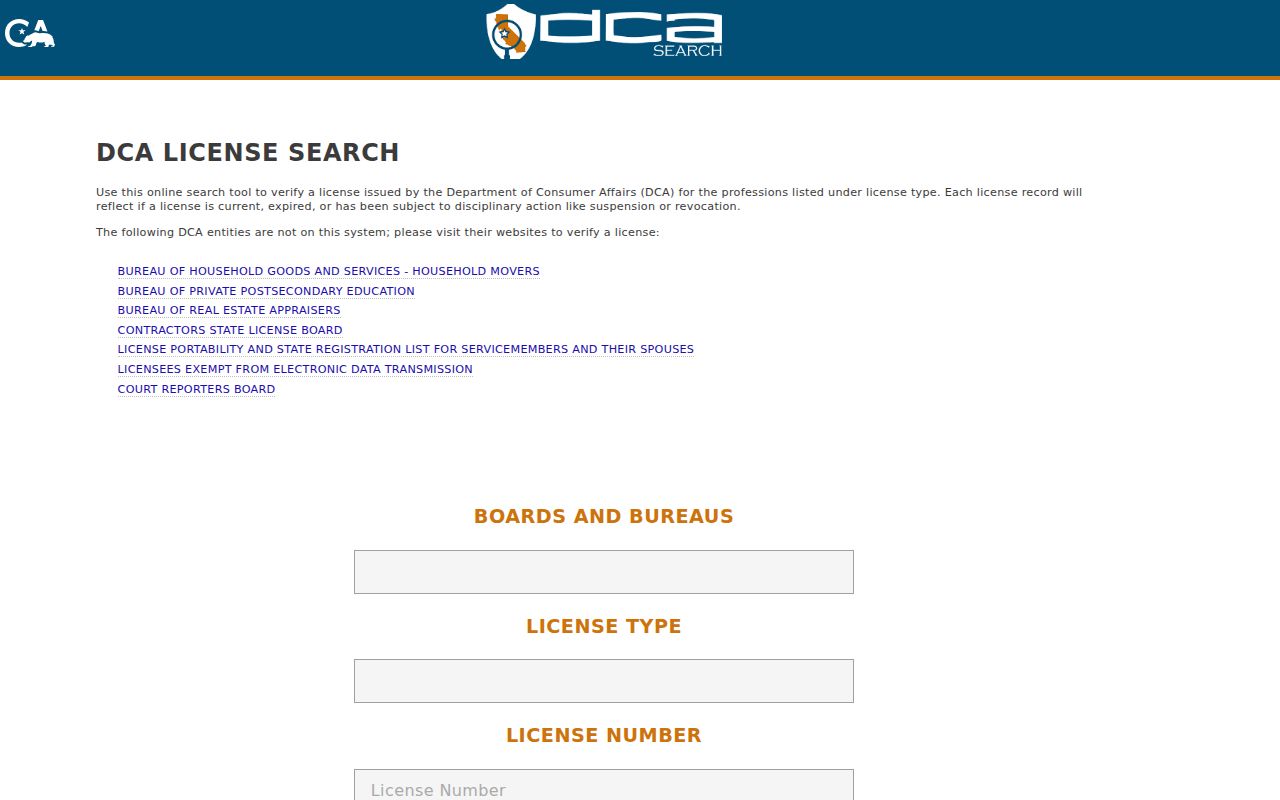
Check the license status and date, then seek a second local anchor before associating two same-name records.
Woodland Unclaimed Property Clues
The California State Controller’s unclaimed-property search can produce a historical affiliation clue. Search by owner name and review reported owner or co-owner, holder or business, property type, and reported address or city. An old reported address is not a current residence. A business or holder can also be unrelated to the person being researched. Confirm any lead with a separate deed, obituary, directory, court, or family source.
The official search is free and should be used directly. A finder or solicitation is not needed for the initial lookup. Save the spelling and reported year, then check whether the same name appears in a Woodland source with a matching date or relationship. Never send extra identity documents to an unverified requester.
The screenshot below is linked to the State Controller’s official search. It represents a public claim-search channel, not a current resident list.
Search California unclaimed property
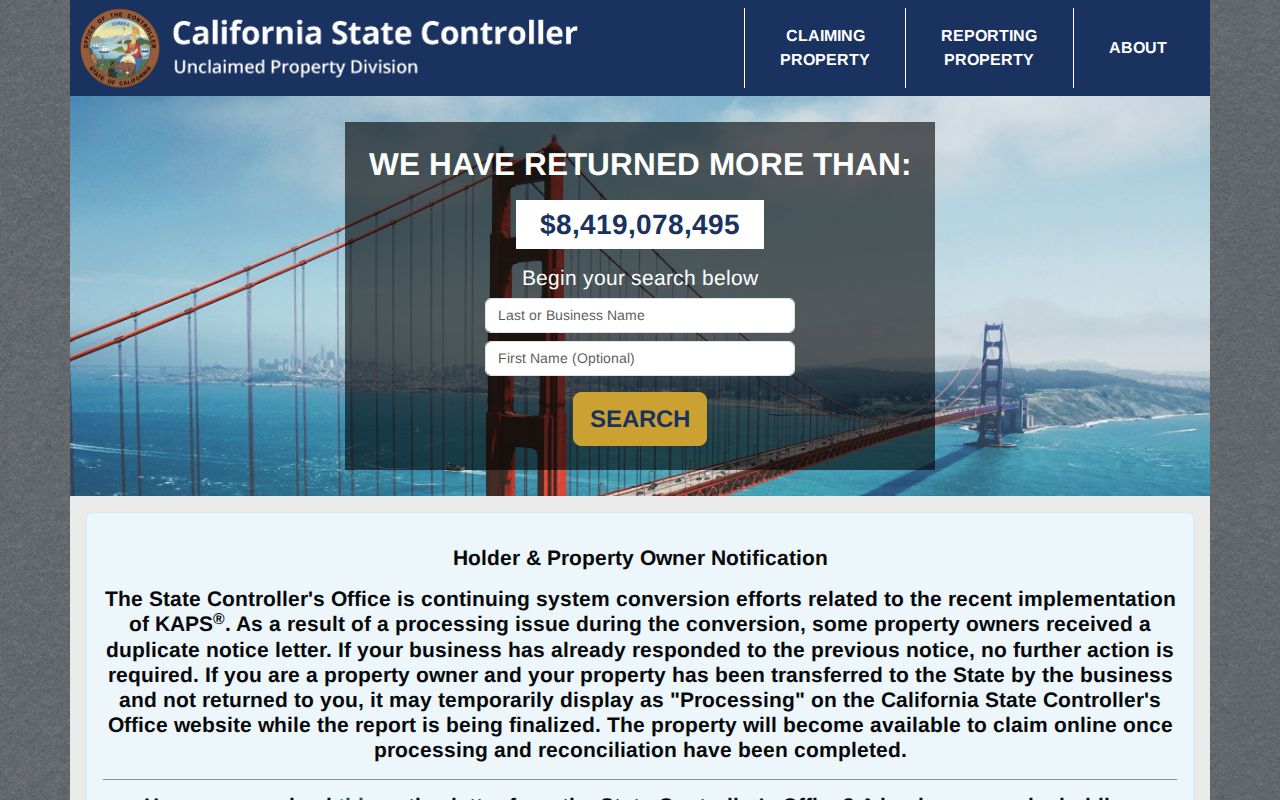
Use the result as a dated clue only. The Controller’s record may reflect a reported location that no longer connects to Woodland.
Woodland Federal Case Checks
Yolo Superior Court is the local trial-court starting point, but a person can also appear in federal records. PACER searches federal cases nationwide, including the Eastern District of California, through an account. Federal civil, criminal, bankruptcy, and district dockets can supply a party name, case number, filing date, and documents, subject to redaction. A federal filing address is a court-file clue, not automatic proof of a current Woodland home.
PACER normally charges $0.10 per page with a $3 cap per document and waives fees when quarterly usage is $30 or less, according to the research. Federal fee notices can change, so verify before ordering. Use the narrowest case or party search, record the district and date, and compare the result with the Yolo portal or a local record.
The PACER screenshot is linked to the federal source before the image. It is included because a complete Woodland resident lookup sometimes crosses the local and federal court boundary.
Access federal case search through PACER
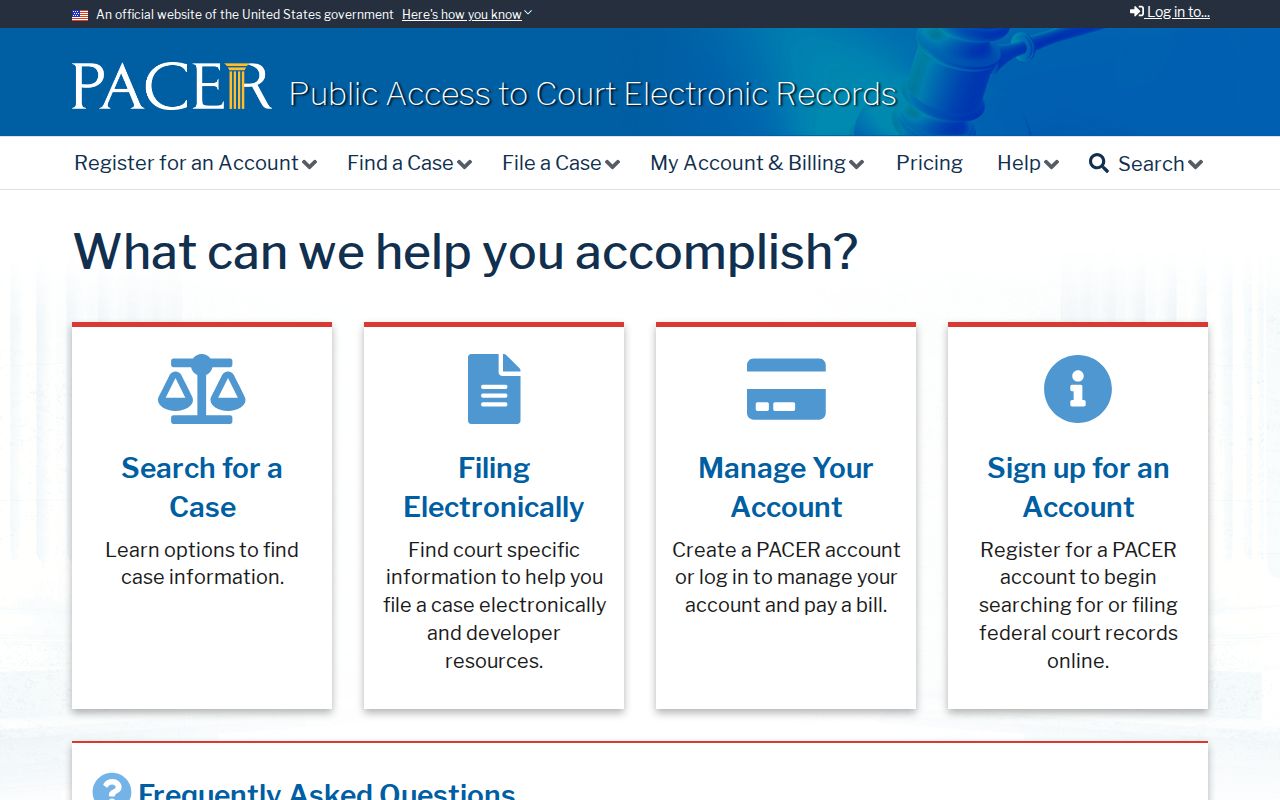
Keep federal and Yolo case numbers in separate notes. Similar captions do not establish that two court records concern one person.
Woodland Records Request Fallbacks
When a portal does not answer the question, use the custodian’s counter, telephone, mail, library, Archives, or California Public Records Act route that fits the record. CPRA Government Code §§7920.000 et seq. applies to state and local executive agencies, not court adjudicative files. A requester need not be a California resident or state a purpose. Agencies generally make an initial determination within 10 days and can extend by 14 days in unusual circumstances. Exempt material should be redacted when reasonably segregable.
Ask for an existing record with a clear date span, person or business name, street address, APN, case number, permit number, document number, or collection title. The City of Woodland public-records channel handles city records. The California Attorney General’s CPRA text is a useful statute reference. Yolo court files follow court rules and clerk procedures. Vital, voter, DMV, adoption, juvenile, and sealed material have separate limits. A broad request for “everyone who lives here” may not be a record the custodian maintains.
Record the response, exemption, redaction, or no-record statement. Correct an error with the source office. A later compilation cannot turn a restricted or uncertain result into verified identity.
Woodland Resident Lookup Boundaries
California closes or narrows several record paths by design. Safe at Home can provide qualifying participants with a substitute mailing address and confidential voter registration. Adoption, juvenile, sealed, and many family-law records have special rules. Vital copies require the right relationship and copy type. Voter data is limited by Elections Code §§2188 and 2194 and related regulations. DMV data is restricted by the federal Driver’s Privacy Protection Act.
When an official source is wrong, ask its custodian about correction or redaction. A commercial compilation cannot correct a deed, certificate, court docket, or voter record. The California Consumer Privacy Act, Civil Code §1798.100 et seq., gives rights against covered businesses, while the DELETE Act provides a data-broker deletion mechanism. Neither law erases lawful government source records or lets a requester bypass a confidentiality program.
Lawful use. A Woodland resident lookup is for lawful personal research, family history, reconnecting, and civic understanding. Using a record to stalk, harass, threaten, or intimidate a person can violate California Penal Code §646.9 or §653.2.